
How to Avoid Losing Money to Fake Funded Trading Offers
Fake funded trading offers are draining money from traders across Nigeria, India, the Philippines, Indonesia and beyond. This guide shows you exactly how to spot them, what patterns scam platforms share, and how to verify a legitimate scholarship-based evaluation before you pay a single cent.

Fake funded trading offers are draining money from traders across Nigeria, India, the Philippines, Indonesia and beyond. This guide shows you exactly how to spot them, what patterns scam platforms share, and how to verify a legitimate scholarship-based evaluation before you pay a single cent.
Start your evaluationHow to Avoid Losing Money to Fake Funded Trading Offers
TL;DR: Fake funded trading offers share predictable patterns — vague company details, no payout proof, and rules designed to make you fail. Learn to spot them before you pay anything.
Key takeaways:
- Scam platforms rarely have verifiable company registrations — always check.
- Payout proof from real traders on a public community (not cherry-picked screenshots) is your strongest signal.
- Retroactively changed rules and hidden fees are the two most common ways traders lose money they should have kept.
- PropScholar is a scholarship-based evaluation platform registered as a Private Limited company in India, with public rules and payouts processed within 4 hours of verification.
- Entry starts from $5 (or Rs.400 with UPI in India) — if a platform charges $300 upfront and has none of these trust signals, that's a serious mismatch.
You found an offer promising a "fully funded" trading account. The numbers look incredible — $100,000 in simulated capital, an 80% profit split, instant approval. All you have to do is pay a small fee and pass their challenge.
Then you pass. And suddenly the payout window extends. Then there's a new rule you somehow violated. Then support stops responding.
This happens constantly — in Lagos, in Mumbai, in Manila, in Jakarta, in Nairobi. The funded trading space has grown fast enough that bad actors have flooded in, and they're specifically targeting beginners in emerging markets who are motivated, underfunded, and looking for a way in. You don't need to be naive to fall for it. You need to not know what the specific warning signs look like. That's what this article fixes.
Why Fake Funded Trading Offers Target Beginners in Emerging Markets
The math is cynical but simple. A trader in Nigeria, the Philippines, or India is often more price-sensitive and less familiar with the specific due diligence steps needed to vet a trading platform. A $97 challenge fee stings less to a scammer in a high-income country than it does to someone earning the local equivalent. And when you're eager to trade serious capital without tying up thousands of dollars of your own money, the appeal of a funded account is very real.
Legitimate platforms exist and they genuinely solve this problem. The scholarship-based evaluation model — where you pay a small entry fee, prove your skill on a demo account, and receive a cash scholarship based on your performance — is a real, working structure. PropScholar has operated this model for over 1.5 years with a 3,000+ member Discord and public payout records. It's verifiable.
But the existence of legitimate platforms also gives scammers a template to copy. They build a website that looks the part, copy the language around "funded accounts" and "profit splits," and collect fees. The difference is in the details, and those details are very specific.
Red Flag 1: The Company Has No Verifiable Registration
This is the single most reliable filter you have. A real business — one that intends to pay you money — has a legal structure. In India, that means a Private Limited registration on the MCA (Ministry of Corporate Affairs) portal. In other countries, equivalent registries exist. If you can't find the company in a government business registry within five minutes of searching, treat that as a serious problem.
A lot of scam platforms operate under vague brand names with no disclosed legal entity behind them. No company name, no registration number, no incorporated address. Some list a physical address that doesn't exist or belongs to a different business entirely.
PropScholar is registered as a Private Limited company in India — the registration is verifiable. That doesn't just mean it's "official"; it means there's legal accountability attached to every transaction. We've written specifically about why a Private Limited registration matters when choosing a trading platform and how to check if a prop firm is registered and trustworthy — both worth reading before you pay anyone anything.
Red Flag 2: Rules That Change After You've Already Paid
This is the method that catches the most traders who are otherwise careful. The rules when you bought the challenge are not the rules when you try to collect your scholarship or payout. A new consistency requirement appears. A news-event trading restriction gets added retroactively. The minimum trading days increase.
Ask this question before you pay: where are the rules published? Are they on a permanent, dated page? Is there any community of traders discussing them? If the only source of truth is a PDF you were emailed or a Terms and Conditions page that has no version history, you have no protection against changes.
PropScholar's rules are public and have never been changed retroactively since the platform launched. That's not just a claim — the 3,000+ trader Discord community means any rule change would be noticed and discussed immediately. Public community accountability is a form of enforcement that a solo trader relying on an email chain simply doesn't have.
Red Flag 3: No Real Payout Proof From Real People
Every legitimate platform in this space has traders who have been paid and are willing to say so publicly. Not curated testimonials on the homepage with no names attached. Actual Discord posts, actual screenshots showing wallet addresses or bank transfers, actual usernames you can search and find.
Scam platforms either have no payout proof at all, or they have the same three screenshots recycled on every page. Look for proof that is:
- Timestamped — when was the payout? A platform claiming to operate for two years should have payouts spread across that period, not just from one week.
- Attributed — a real username or handle you can verify exists.
- Unsolicited — traders posting in a public forum, not just screenshots the company selected.
Red Flag 4: Fees That Don't Match What You're Getting
A $300 entry fee for a $10,000 evaluation account is a 3% cost. That's not inherently unreasonable if the platform is legitimate. But if you're paying $300 and the platform has none of the trust signals above — no verifiable registration, no public rules, no community payout proof — you're essentially sending $300 to a website.
The flip side is also true: a very low fee is not itself suspicious. PropScholar's entry-level 1K 1-Step evaluation starts at $5 (or Rs.400 in India via UPI). The fee is low because it's genuinely designed for beginners, and because the platform's model is based on volume of legitimate traders passing evaluations, not on collecting fees from people who will never get paid.
If you're in Nigeria, that's roughly 8,000–9,000 Naira paid via USDT — less than a meal out. In the Philippines, it's under 300 Pesos in crypto. The point isn't just that it's cheap; it's that the risk-to-learning ratio is reasonable for someone still developing their skills. A scam platform would rather you pay $97 than $5, because the margin per victim is higher.
Red Flag 5: Support That Disappears When It Matters
Pre-sale support is easy. Every platform responds quickly when you're asking how to buy. The test is what happens when you've passed and are asking when you get paid, or when something is unclear about a rule during your evaluation.
Watch for platforms where:
- Support tickets go unanswered for more than 48 hours on routine questions.
- There's no community where other traders can confirm your experience is normal or flag if something's wrong.
- The only contact method is a generic email form with no response timeline.
Red Flag 6: Evaluation Rules Designed to Make You Fail
This one is subtler than the others and worth taking time on. Some platforms — not obviously fraudulent, but built on bad faith — set evaluation rules that are statistically very difficult to pass. Extremely tight daily drawdown limits combined with high profit targets and short time windows mean the house always wins: you fail, they keep the fee, you buy again.
A legitimate evaluation should be challenging but achievable with disciplined trading. The numbers should make sense together. A $1,000 simulated account with a 1% daily drawdown limit ($10), a 5% max drawdown ($50), and a 10% profit target ($100) is one you can model and plan for. Vague or inconsistently applied rules, or limits so tight that a single standard trading session could wipe you out, are a signal that the challenge isn't designed for you to pass.
The article on red flags of trading evaluation scams goes deeper on this pattern specifically — the mechanics of how rule structures can be designed to guarantee failure.
Red Flag 7: Crypto-Only Payments With No Paper Trail
Crypto payments are legitimate and useful — PropScholar accepts crypto globally for exactly this reason, so traders who don't have access to international cards can still participate. But crypto-only operations with no company identity attached are a specific risk pattern.
When you pay crypto to a registered business with a named entity, a public community, and verifiable rules, the payment method is just a convenience. When you pay crypto to an anonymous wallet connected to a website that will disappear in three months, you have no recourse at all. The payment method isn't the risk. The lack of any other accountability infrastructure is the risk.
Before you pay anything in crypto, confirm: what is the legal name of the entity you're paying? Where is it registered? What is the dispute process if something goes wrong? If any of those three questions can't be answered from the platform's own public pages, that's your answer.
How PropScholar Stacks Up Against These Standards
Company Registration
PropScholar is a Private Limited company registered in India under the MCA. The registration is public and verifiable. There's a real legal entity behind every transaction.Rule Transparency
All evaluation rules are published publicly and have never been changed retroactively. Traders in the 3,000+ member Discord would surface any change immediately — that community accountability is part of the trust infrastructure, not separate from it.Payout Speed and Proof
Scholarship payouts are processed within 4 hours of verification. The Discord has continuous, unsolicited, timestamped payout records from real members — not curated homepage quotes.Entry Cost and Payment Options
Starting at $5 globally (paid in USDT crypto) or Rs.400 in India via UPI through PhonePe, Razorpay, or Cashfree. The low entry price reflects the model: it's designed for traders to participate, evaluate their skills, and earn — not for the platform to collect fees from people who have no chance of passing.Support Access
24/7 support in Hindi and multiple languages. Questions get answered before, during, and after the evaluation — including at the payout stage when it matters most.If you want to compare platforms, bring these criteria to every one you're considering. A platform that scores well across all seven isn't hard to evaluate quickly. One that deflects or can't answer basic questions about registration and payout proof needs no further investigation.
FAQ
How do I know if a funded trading offer is a scam? Check for five things: a verifiable company registration, publicly posted rules that haven't changed retroactively, real payout proof from named traders in a public community, responsive support before and after purchase, and evaluation rules that are mathematically achievable. A platform that can't show you all five should not receive your money.
Is PropScholar a legitimate platform or a scam? PropScholar is a scholarship-based trading evaluation platform registered as a Private Limited company in India under the MCA. It has operated for over 1.5 years, has 3,000+ traders in a public Discord with verifiable payout records, and processes scholarship payouts within 4 hours of verification. It is not a prop firm and does not manage institutional capital.
What should I do if a trading platform refuses to pay my withdrawal? Document everything: your trade history, the evaluation rules at the time of purchase, your payout request, and all communication. Post in public trader communities to see if others have had the same experience. If the platform is registered, file a complaint with the relevant business registry. For platforms with no registration, public documentation is often the only recourse, which is why verifying registration before paying is critical.
Why do fake funded trading platforms target traders in emerging markets? Because the demand for funded account access is high, budget constraints make the relatively small fees feel significant, and awareness of specific due diligence steps is lower. Scam platforms exploit the genuine appeal of earning trading capital without risking large sums of personal money. Legitimate platforms like PropScholar serve the same real need — access at low cost, with genuine payouts.
Can I trust a prop firm that only accepts crypto payments? Crypto payments are not inherently untrustworthy — PropScholar accepts USDT globally for exactly this reason. The risk isn't the payment method; it's whether the receiving entity has a verifiable legal identity, public rules, and a real community with payout proof. An anonymous crypto wallet attached to an unregistered website is a problem regardless of whether it also accepts credit cards.
What is the cheapest way to safely start a funded trading evaluation? PropScholar's 1K 1-Step evaluation starts at $5 globally, paid in USDT, or Rs.400 in India via UPI. At that price, even if you fail the evaluation, you've spent less than most streaming subscriptions while getting real practice under evaluation conditions. The key is that the low cost comes with a registered platform, public rules, and a real payout structure — not just a cheap entry fee with no accountability behind it.
How do I verify a trading platform's company registration? For India-registered platforms, search the company name on the MCA (Ministry of Corporate Affairs) portal at mca.gov.in — you should find a matching active Private Limited registration. For platforms registered elsewhere, use the equivalent national business registry. PropScholar's registration is verifiable on MCA. If a platform claims registration but you can't find it within a five-minute search, treat that as a red flag.
PropScholar is a scholarship-based trading evaluation platform operated by a Private Limited company registered in India. We are not a prop firm and do not manage or allocate institutional capital. Our model rewards proven trading skill with scholarship grants upon successful evaluation completion.
Related reading
- The Safest Way for a College Student to Start Trading and Not Lose Money
- Is PropScholar Legit or Fake? The Honest 2026 Review Every Trader Should Read Before Paying
- Is Online Prop Trading Legit or a Scam? A Complete Trust Guide
- Are Free Funded Accounts Real? What 'Free' Prop Offers Actually Cost You
- Cheap Prop Firms Are a Scam: How PropScholar Gives You the Easiest Evaluation and a Real Path to Reliable Funded Trading
- Which Trading Platforms Actually Pay Fast: What to Verify First
Ready to Prove Your Edge?
Join 500+ traders. Start from just $5. Get funded within days.
Frequently Asked Questions
Check for five things: a verifiable company registration, publicly posted rules that haven't changed retroactively, real payout proof from named traders in a public community, responsive support before and after purchase, and evaluation rules that are mathematically achievable. A platform that can't show you all five should not receive your money.
More From PropScholar
Trader Safety
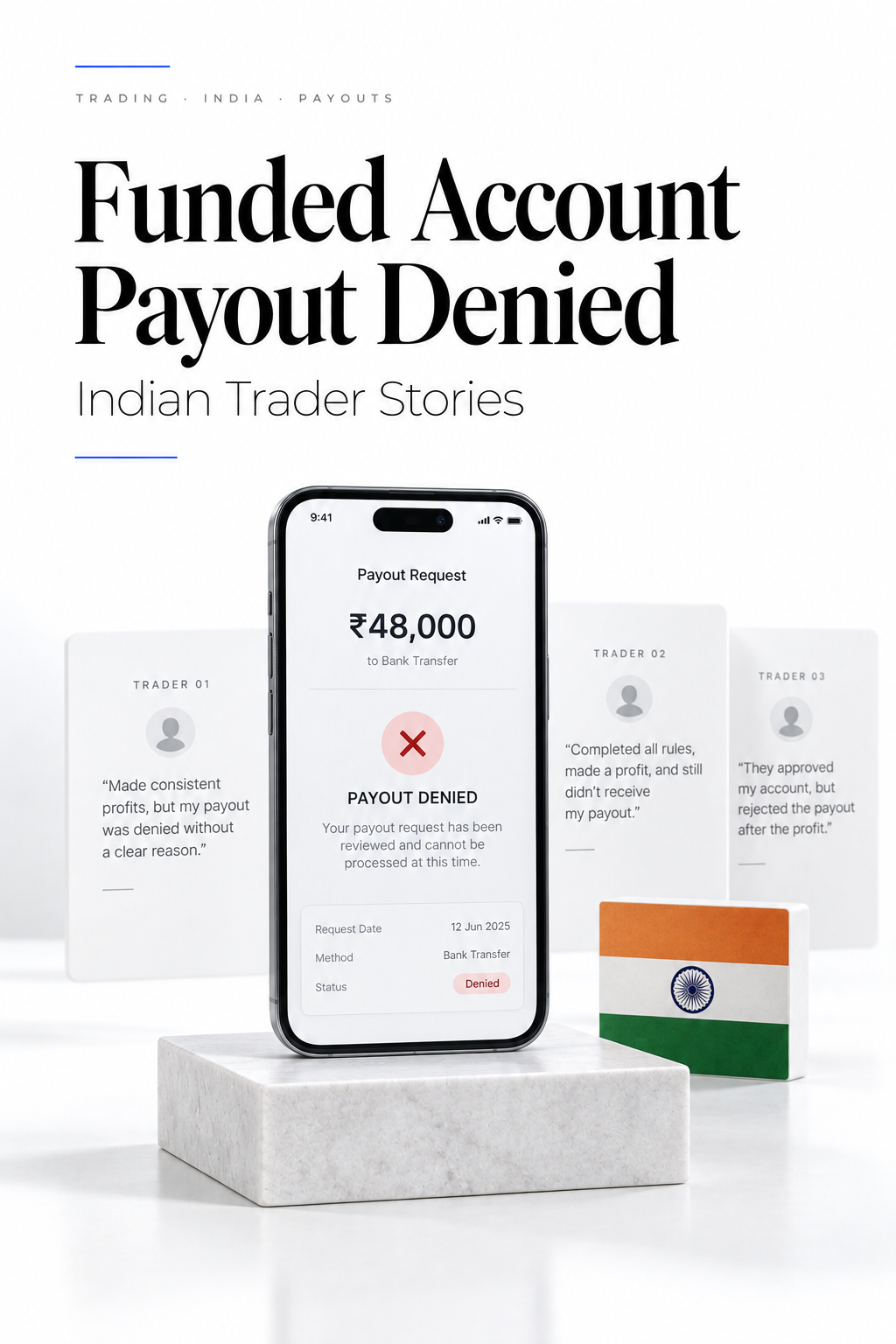
Payout Denied After Passing? 7 Rule Clauses Indian Traders Miss
13 min read

Trader Safety
Why $1 Trading Challenges Fail for Beginners in Emerging Markets
12 min read
Trader Safety
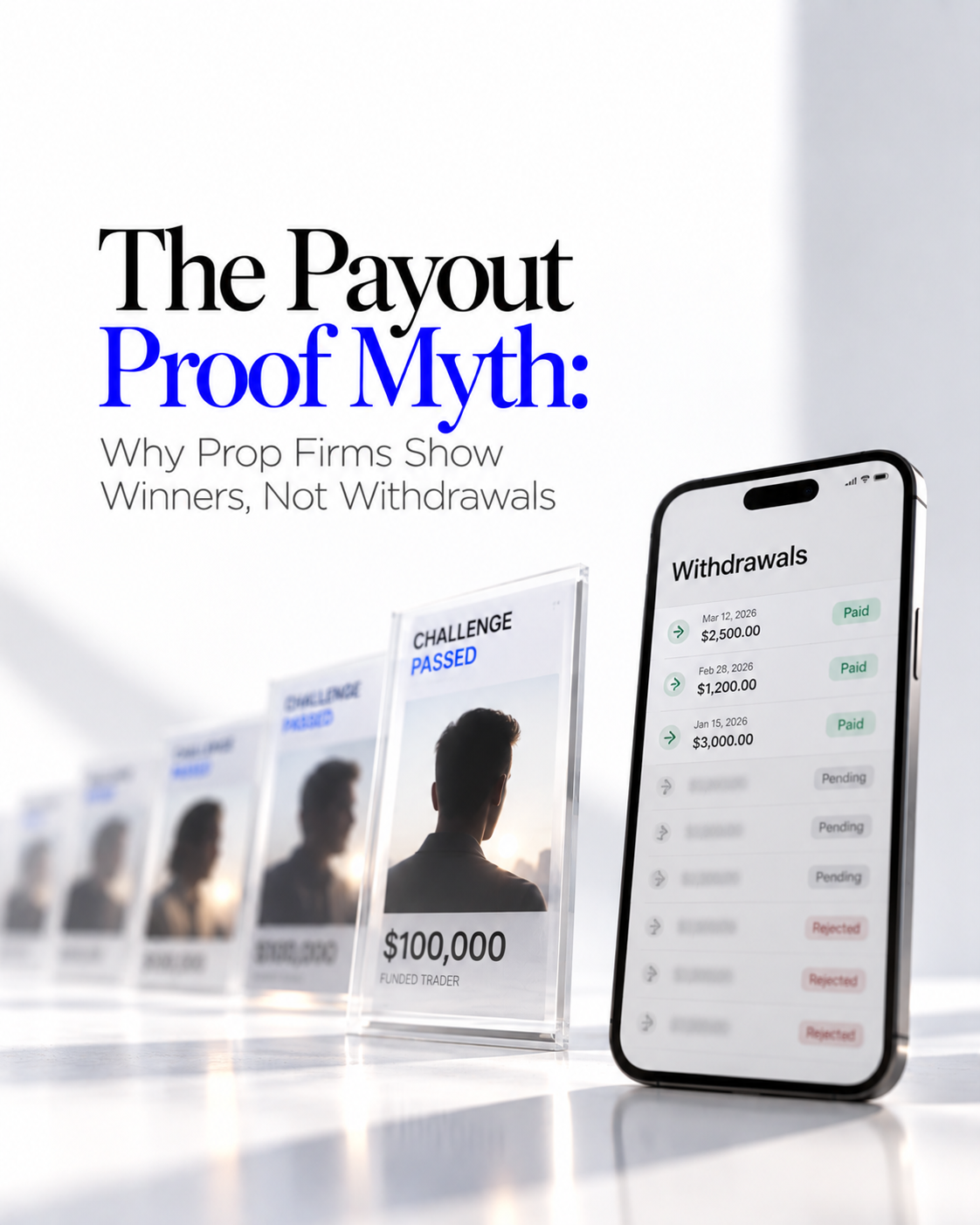
The Payout Proof Myth: Why Prop Firms Show Winners, Not Withdrawals
11 min read

Trader Safety
How to Spot Fake Payout Proof in Trading Discord Servers
12 min read
Trader Safety
Is Pay After Pass Legit or Not? The Honest Answer for 2026
11 min read
Trader Safety
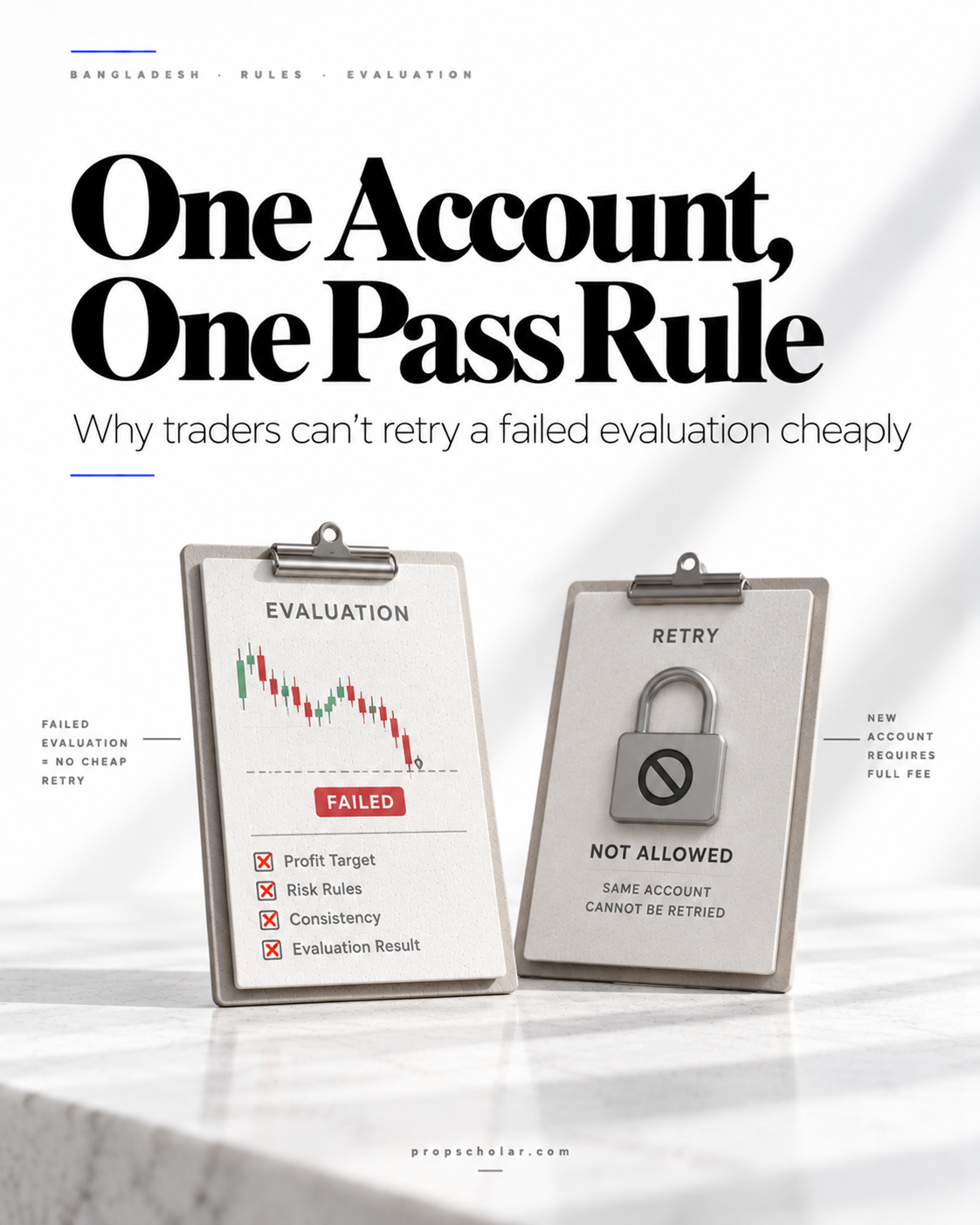
One Account, One Pass Rule: Why Bangladesh Traders Can't Retry a Failed Evaluation Cheaply
10 min read