
Pay After Pass vs $5 Evaluation: Which Pays Out More?
Pay-after-pass vs low-cost scholarship evaluation compared on real total cost, profit splits, and payout speed. See which model actually puts more money in your pocket.
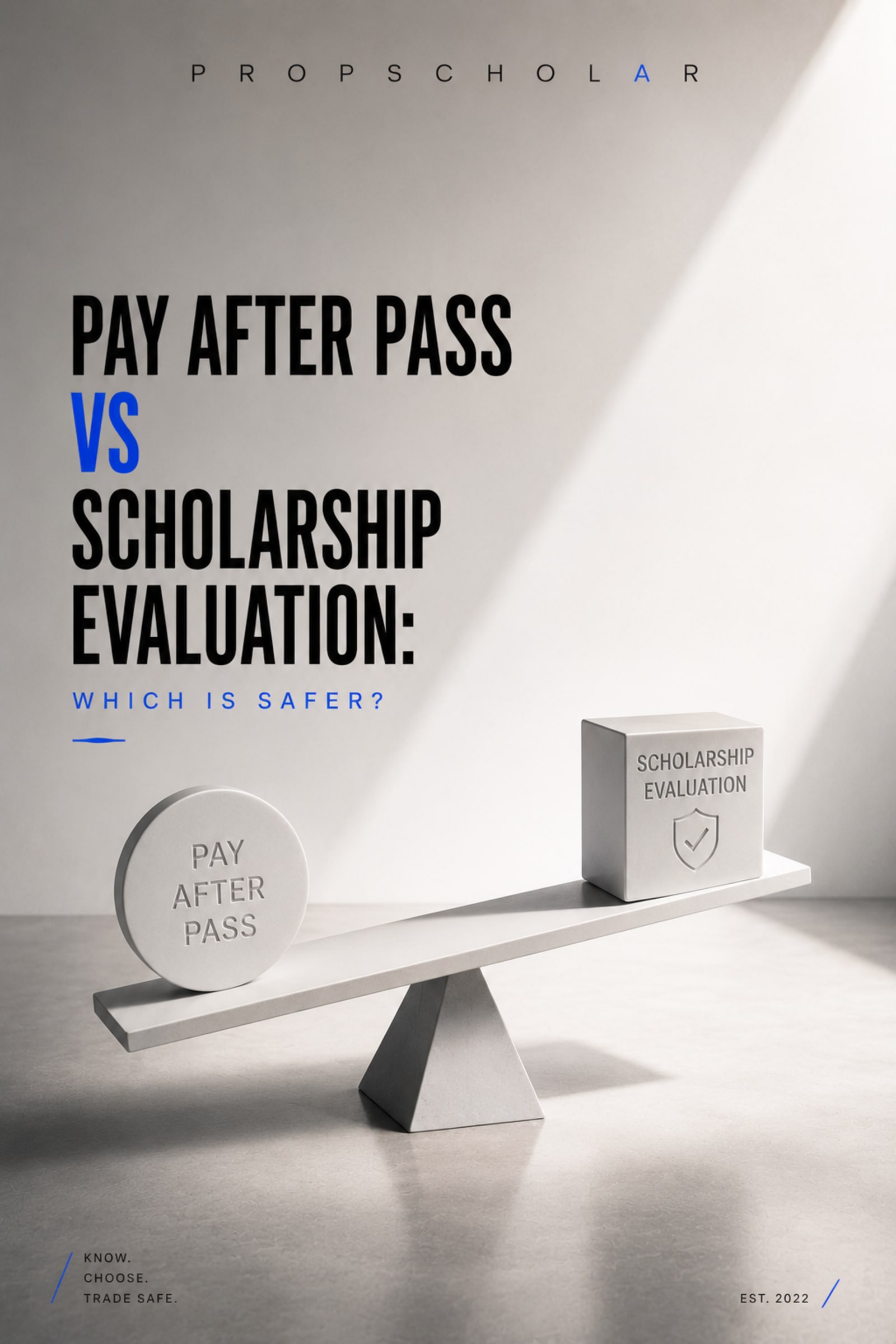
Pay-after-pass vs low-cost scholarship evaluation compared on real total cost, profit splits, and payout speed. See which model actually puts more money in your pocket.
Start your evaluationPay After Pass vs Scholarship Evaluation: Which Is Safer and Cheaper?
TL;DR: Pay-after-pass sounds free, but the hidden costs and payout risks often make it the more expensive option. A low-cost scholarship evaluation — starting at $5 — is frequently cheaper, more transparent, and faster to pay out.
Key takeaways:
- Pay-after-pass models shift costs into profit splits, recurring fees, or restrictive rules — the upfront saving often evaporates.
- Scholarship evaluations charge a small, one-time entry fee and reward verified skill with a grant — the structure is simple and public.
- PropScholar's evaluations start at $5 (around Rs.400 / ₦8,000 / PHP 280) with payouts claimed within 4 hours of verification.
- Neither model is universally "safe" — the platform's transparency, registration, and track record matter far more than the fee structure alone.
- The cheapest evaluation is the one where the rules are clear, never change retroactively, and you actually get paid.
You've probably seen the ads. "Pass our challenge, pay nothing upfront." It sounds like the obvious choice — why risk your own money when you don't have to?
But here's what those ads don't tell you: every platform has to make money somewhere. If you're not paying an entry fee, the cost is buried somewhere else — in the profit split, in monthly subscription fees, in aggressively tight rules you'll almost certainly break, or in a payout process that finds reasons to deny your withdrawal. The question isn't really "upfront fee vs no fee." The question is: where does your money actually go, and do you ever get paid?
Let's compare both models properly.
How Pay-After-Pass Actually Works
Pay-after-pass platforms let you attempt a trading evaluation without paying anything upfront. If you pass, you either pay a fee to activate the funded account or agree to a reduced profit split that compensates the platform for your free trial.
On the surface, that sounds fair. In practice, there are a few patterns worth watching.
The profit split math changes. A platform offering a "free" evaluation will often give you a 50/50 or 60/40 split where a fee-based platform might offer 80/20. On a $10,000 account generating $1,000 in profit, that difference is $200 per cycle — real money that adds up fast.
Some models charge after you pass. You pass the challenge, feel great, then discover there's an activation fee, a KYC processing fee, or a platform subscription you didn't fully register. Read the full breakdown of what pay-after-pass alternatives really involve — the details matter.
Rules can be designed to fail you. When a platform's revenue depends on most traders failing, there's an incentive to set rules that are just tight enough. Not accusing every platform — but it's a documented pattern in this industry, and you should check rule history before trusting any platform.
How a Scholarship Evaluation Works
A scholarship-based evaluation platform — which is exactly what PropScholar is — operates on a different model. You pay a small, one-time entry fee to access a structured trading evaluation. If you pass, you don't get a "funded account" in the traditional sense. You receive a scholarship grant based on your evaluation account size, paid out in cash.
PropScholar's grants go up to 400% of the entry fee. The entry point is $5 globally (around Rs.400 in India, payable via UPI). Outside India, crypto is accepted — USDT and other major coins — so traders in Nigeria, the Philippines, Indonesia, South Africa, or anywhere else can participate without needing USD in a bank account.
Payments are made within 4 hours of verification. That's not a vague "fast payout" promise — it's a specific number we stand behind, and our Discord community of 3,000+ traders has the payout screenshots to show it.
The rules are public. They don't change retroactively. That matters more than any fee structure.
The Real Cost Comparison
Upfront Costs
Pay-after-pass: $0 upfront. Scholarship evaluation (PropScholar): from $5.
At face value, pay-after-pass wins. But that $5 buys you access to a defined, transparent evaluation with clear payout terms. A "free" trial with opaque profit-split changes or post-pass fees can cost you far more over time.
Profit Split and Ongoing Costs
Pay-after-pass platforms routinely offer 50-70% splits to traders who came through a free route. Scholarship evaluations like PropScholar's don't work on an ongoing split basis at all — you pass, you receive the scholarship grant, done. There's no monthly subscription, no trailing revenue share, no recurring cost.
For traders doing multiple evaluations per year, the cumulative saving is significant. A trader doing four evaluations annually at $5 each pays $20 total in entry fees. A pay-after-pass platform with a monthly maintenance fee of even $10 costs $120 per year — and that's before a single trade.
Speed and Certainty of Payout
This is where the comparison gets most important. A scholarship grant is a defined payment for completing a defined task. The verification process is clear, the timeline is specific (4 hours at PropScholar), and there's no ongoing relationship to manage.
Pay-after-pass funded accounts often involve profit splits calculated at the end of a trading cycle, withdrawal request processes, minimum balance requirements, and review periods. Some traders wait weeks. Some find their withdrawal flagged for technical rule violations they didn't know existed.
Which Model Is Actually Safer?
Safety in this context means two things: financial safety (you don't lose more than you planned) and operational safety (you actually get paid when you earn it).
On financial safety, scholarship evaluations win clearly. Your maximum exposure is the entry fee — $5 at PropScholar's minimum. There's no risk of losing a larger activation fee post-pass or getting locked into a subscription while you wait to pass again.
On operational safety, the platform matters more than the model. A pay-after-pass platform with clear rules, MCA registration, and an active community might be safer than a scholarship platform with vague terms. But when both factors align — transparent model AND a registered, community-verified platform — the scholarship approach is simpler to audit. Fewer moving parts means fewer ways to get caught out.
PropScholar is a Private Limited company registered in India under MCA, has been operating for over 1.5 years, and maintains a public Discord where traders post payout evidence. That kind of verifiable footprint is something any platform — pay-after-pass or otherwise — should be able to match. If they can't, that tells you something.
For a detailed look at what separates genuinely affordable evaluations from cheap-looking ones with expensive hidden structures, see our guide to low-cost trading evaluations that don't sacrifice fairness.
PropScholar vs Pay-After-Pass: The Honest Summary
What Pay-After-Pass Does Well
It removes the psychological barrier of an upfront fee. For traders who are genuinely uncertain whether they want to commit, this lowers the entry point. If the platform is transparent about its split structure and has no hidden post-pass fees, it can be a reasonable option for some traders.
Where Scholarship Evaluations Win
The total cost is capped and known before you start. The payout is a clean grant, not a complex profit-share calculation. There's no monthly overhead. And platforms like PropScholar that publish their rules and operate from a registered company give you something concrete to verify before you spend a single dollar.
At $5 to enter, the financial risk is genuinely small — smaller than most pay-after-pass platforms' post-pass fees. And the 400% scholarship multiplier means a $5 evaluation can return $20 on a successful pass. That's a defined outcome, not a variable split that changes with market conditions or platform policy.
If you're working with a tight budget — which most traders in emerging markets are — the best-value evaluation breakdowns show why low, transparent entry fees consistently beat "free" models with buried costs.
Before You Decide: Questions to Ask Any Platform
Regardless of which model you're considering, these questions will tell you more than the fee structure ever will:
Are the rules public and have they ever changed retroactively? A platform that modifies rules mid-cycle is a platform you can't trust. PropScholar's rules are fixed and public.
How exactly is the payout calculated and how long does it take? Vague answers here are a red flag. "Within 4 hours of verification" is the kind of specific answer you should be looking for.
Is the company registered? Can you find their registration, physical address, or verified business identity? MCA registration is verifiable in India. Offshore-only platforms with no registration details warrant caution.
Is there an active community where traders discuss results? A Discord or Telegram with 3,000+ real traders who post payouts is harder to fake than a website testimonial.
PropScholar is a scholarship-based trading evaluation platform operated by a Private Limited company registered in India. We are not a prop firm and do not manage or allocate institutional capital. Our model rewards proven trading skill with scholarship grants upon successful evaluation completion.
Related reading
- Cheapest Prop Firm in 2026: The Complete Price Comparison Guide (From ₹300 With FIFA Discount)
- Cheapest Legit Way to Access a Funded-Style Trading Account From $5
- Best $1 Trading Challenge 2026: Why 1K 1-Step Wins
- Cheapest Prop Trading Evaluation in 2026 Ranked by Real Total Cost
- How to Start a Trading Evaluation for Under ₹500 or Under $10
- How to Get a Cheap Funded Trading Account Without Falling for Traps
Ready to Prove Your Edge?
Join 500+ traders. Start from just $5. Get funded within days.
Frequently Asked Questions
Not always. Pay-after-pass platforms eliminate the upfront fee but often recoup costs through lower profit splits (sometimes 50/50 vs 80/20), post-pass activation fees, or monthly subscriptions. PropScholar's scholarship evaluation starts at $5 with no ongoing fees and a clearly defined payout — making the total cost lower for many traders, especially those doing multiple attempts per year.
More From PropScholar
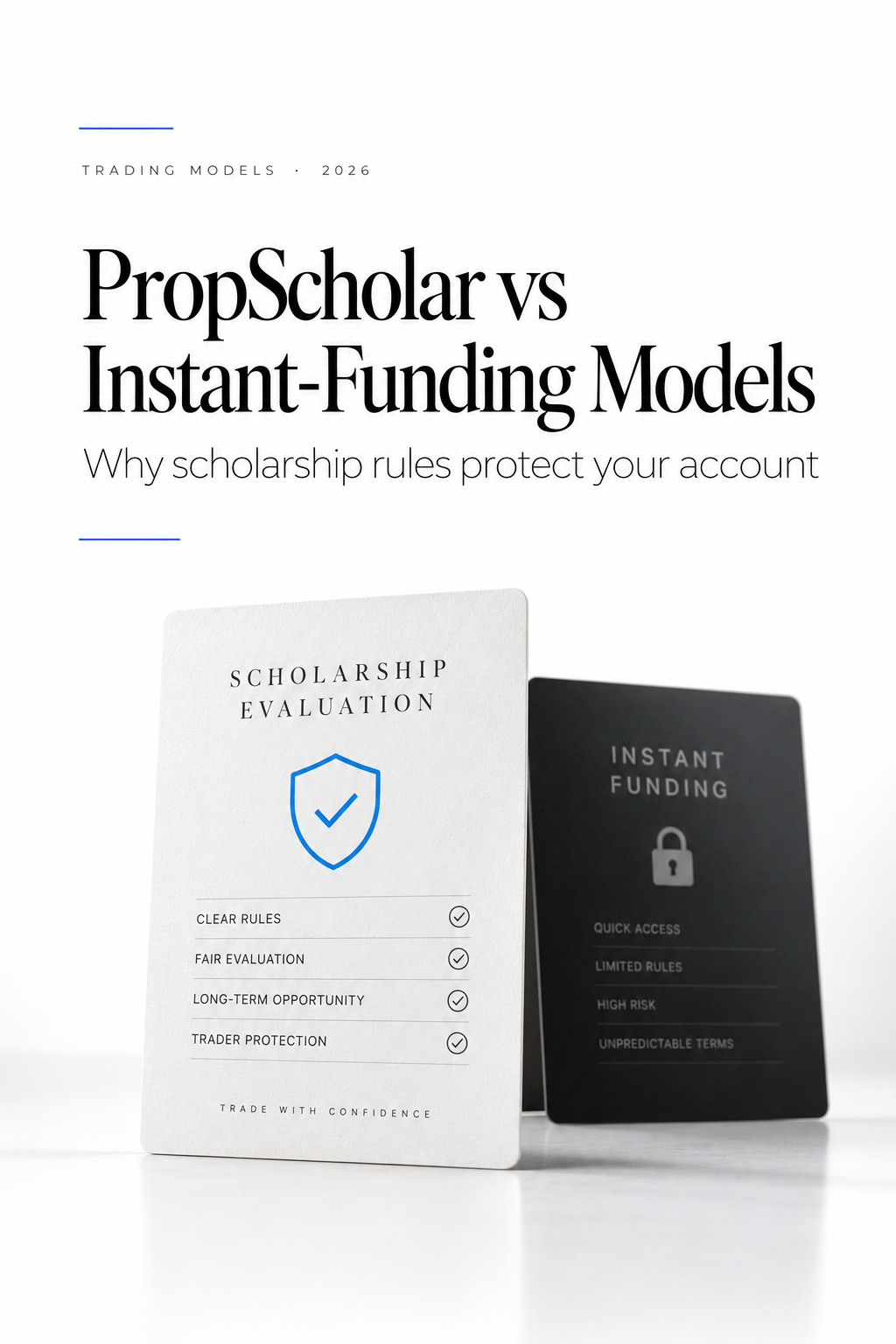
Trading Comparison
Instant Funding vs Evaluation: Which Protects Beginner Traders More?
11 min read
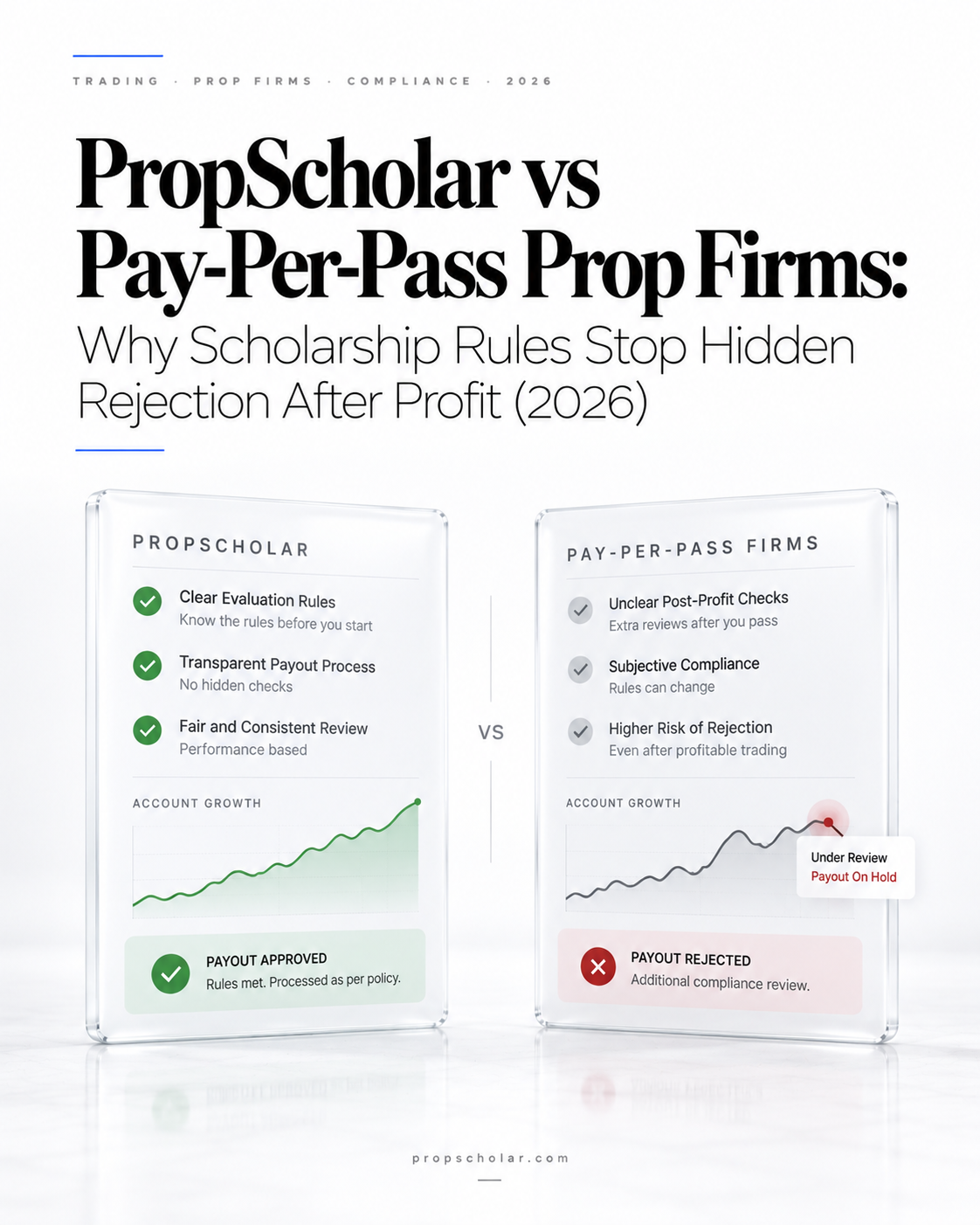
Trading Comparison
Post-Profit Rejection Explained: Scholarship Rules vs Prop Firms
11 min read
Trading Comparison
How to Choose the Right Trading Evaluation in 2026
14 min read
Trading Comparison
Hidden Reset Costs in Trading Evaluations: Full Breakdown
13 min read

Trading Comparison
Safer Alternative to Risky Prop Firms: Read This First
9 min read
Trading Comparison
Prop Firm Fees in INR, Naira & Crypto: Real Costs Explained
12 min read